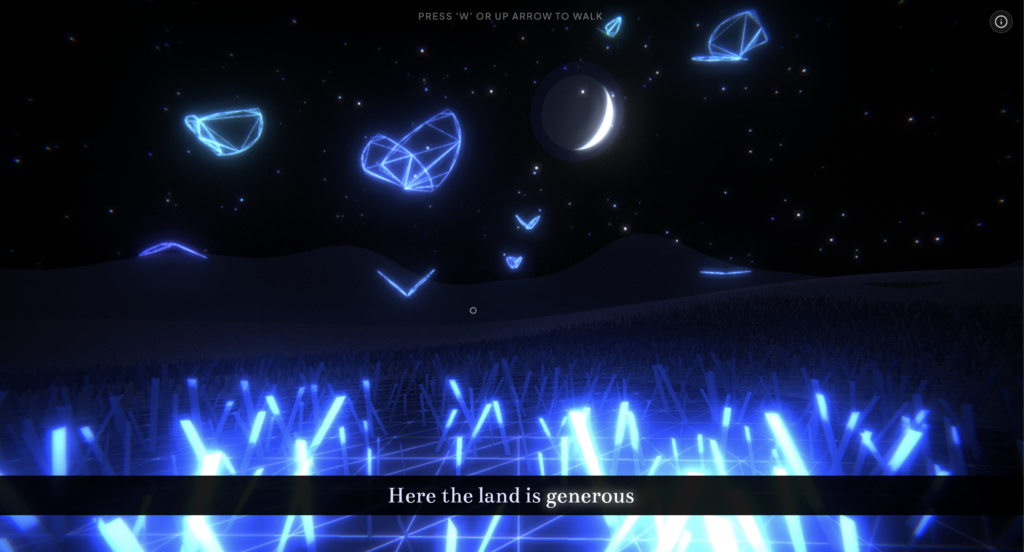
Colombia’s Truth Commission released 2,000 anonymized interviews about the country’s decades-long armed conflict. For this experiment, we wanted to bring users closer to each individual story, so simply aggregating the data wasn’t enough. We drew inspiration from the video game industry, particularly the first-person perspective, where players experience the world through the eyes of a character. It felt like the right interaction for our project, although we had to adapt the concept to make it work for this context.
The interviews we worked with were verbatim transcripts of conversations between interviewees and Truth Commission staff. While these transcripts were valuable, they could be difficult to read and follow. Our first step was to clean and simplify them. Using a locally hosted Gemma 4 26B model, we transformed each transcript into a coherent first-person narrative with a clear beginning, middle, and end. During the same process, we also made sure that any names of people or places that could reveal someone’s identity were removed. At this point, we had a CSV file containing the processed transcripts, ready for the next stage.
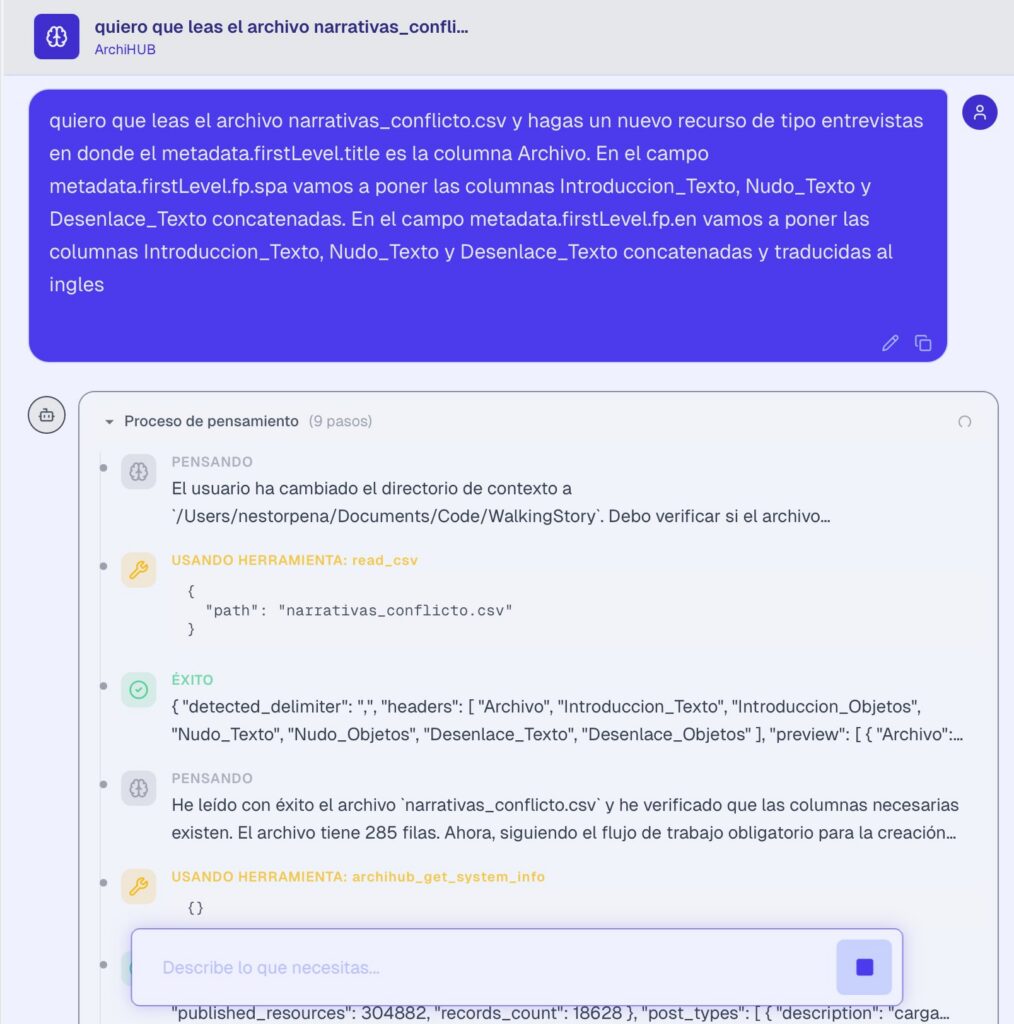
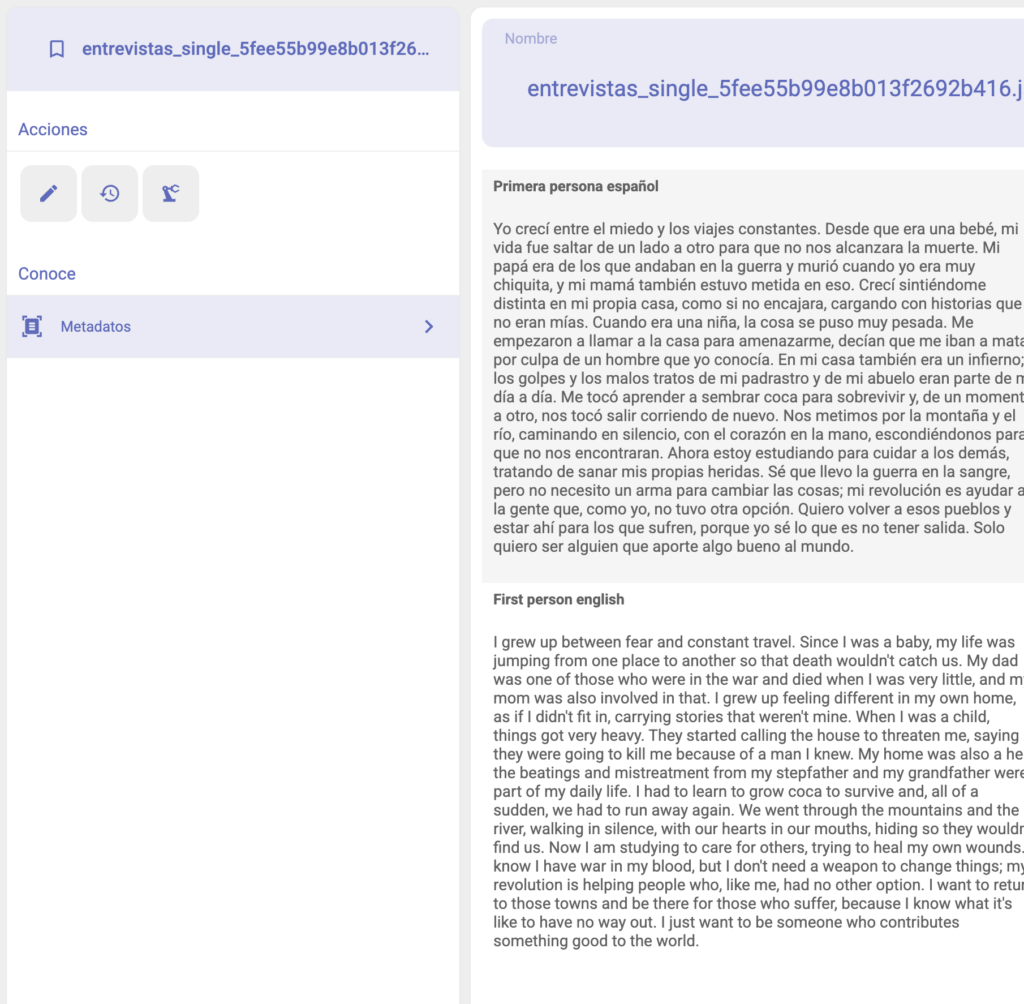
The next step was to upload the processed interviews into ArchiHUB so they could be indexed and analyzed. We used the ArchiHUB Desktop app to automate this process. It imported the CSV file, created a new resource for each row, and stored the processed text in the appropriate metadata fields. During the upload, we also translated each interview from Spanish into English and saved the translation alongside the original. Our goal was to make these stories accessible to as many people as possible.
Once that was done, we could focus on building the web experience itself. We started by creating a character and asking ourselves a simple question: What should the user do while the story is being told? The answer was equally simple: walk. As the user walks, the story unfolds. Walking became our playback mechanic: walk to continue the narrative, stop to pause it.
For the environment, we chose not to recreate a realistic landscape. Instead, we embraced a digital aesthetic that openly acknowledges the medium itself. The ground is a simple digital plane with its wireframe left visible, while procedural grass gradually appears as the user walks. Lighting was another key element of the experience. We set the entire scene at night so that the two main light sources (the moon and the character) would stand out clearly. As the character walks, a soft light radiates from itself, making it clear that it is illuminating his own path through the darkness.
We also added a small group of butterflies with their wireframes intentionally left visible. They serve as a subtle magical reference to the yellow butterflies in the works of Gabriel García Márquez, while reinforcing the digital visual language of the experience.
Finally, although the archive contains 2,000 stories, our goal was never for users to experience all of them. Instead, we wanted to create a personal connection by bringing each user closer to a single story that resonates with their own experiences.
To achieve this, we designed a short questionnaire that combines keyword matching with semantic search. As users answer a series of questions, the system identifies the interview that most closely relates to their personal experience. Rather than simply filtering a database, this process creates a bridge between the user’s own story and one of the stories preserved in the archive.
There are many small details like these that come together to shape the experience. We put a great deal of care into every decision, hoping to create something that reflects the respect both these stories and the work behind preserving them deserve.
Many of those details are intentionally left out of this post; we hope you’ll discover them for yourself as you explore the experience.